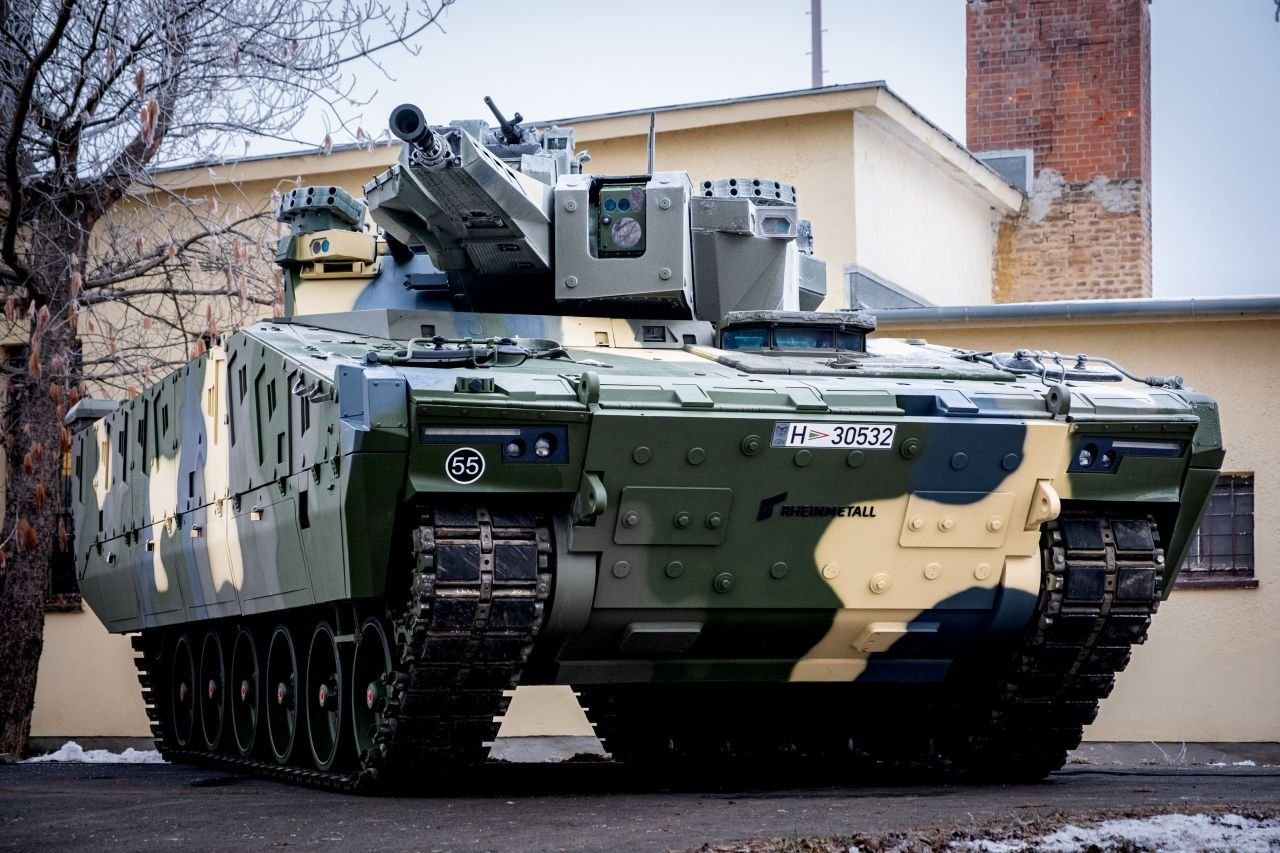
The armaments sector in Germany, in Berlin's political assumptions the new "locomotive" of the country's industry, is currently passing through a phase of painful verification. The Rheinmetall concern, regarded as a key actor in this process, recorded in the first quarter of the current year results which, despite an 8 percent rise and turnover at the level of 1.94 billion euros, did not meet the high expectations of investors and decision-makers. Initial market forecasts assumed an exceedance of the 2.3 billion euro threshold, which means that the real financial result is about 20% lower than planned. This disproportion has provoked a discussion on the stability of the foundations on which the strategy of rapid growth of the sector was based. This suggests that social and market expectations may have been excessively built up in relation to the actual production capacity and the pace of order fulfilment in the initial phase of the year.
Despite the disappointing data for the first quarter, the management of the concern maintains optimistic forecasts for the remainder of the year, announcing a sharp acceleration in the coming months. Rheinmetall declares that annual turnover will rise by 40 to 45%, and that the order portfolio in 2026 is to be one third larger than in the previous year. Such dynamic assumptions are based on the anticipated accumulation of orders whose fulfilment in the first quarter was deferred. The strategic goal of Germany is the transformation of the defence industry into a modern "jet aircraft", which will pull the entire economy out of a period of stagnation. This gives the financial results of the armaments companies a dimension extending beyond pure economics and becoming an element of reason of state. The patience of investors is currently being put to the test, but the promises of a leap in profitability are meant to serve as a stabiliser of moods.
The realisation of these ambitious financial goals is closely linked to mechanisms of political support and specific instruments such as SAFE loans. Attention is drawn to the evident connection between these informal documents and Rheinmetall's order portfolio — it is precisely these funds that are to enable allied states to carry out large-scale purchases. The concern's high hopes for a 31% increase in orders in the perspective of 2026 are in large measure determined by the success of extra-treaty financial mechanisms. They are meant to fill the gap between political declarations and the real flow of capital. This strategy makes the concern a beneficiary of a specific configuration of forces, in which business success depends not only on the quality of the equipment offered, but above all on the dexterity of officials in circumventing traditional budgetary and legal blocks.
The long-term perspective for the development of the German giant, however, remains burdened with geopolitical risk that may lead to a sudden braking of demand. The current boom results directly from ongoing conflicts, including the war in Ukraine and tensions in the Persian Gulf region. There is, however, a real concern that a possible easing of the international situation or the conclusion of peace agreements could result in a sudden fall in demand for modern weapons systems, leading to the bursting of the "balloon" inflated by the current orders. In such a scenario the announced rises could prove unrealistic, and the role of the defence industry as the "saviour" of the German economy would be called into question. The future of the concern is therefore as much dependent on the durability of armed conflicts as on the efficiency of mechanisms of the SAFE type.
To sum up, the armaments sector in Germany recorded a weaker-than-forecast start to the year. Rheinmetall, however, plans to catch up, aiming at a leap in annual growth of the order of 45%, which is to be achieved thanks to the accumulation of orders supported by controversial loan mechanisms. The success of this strategy is based on maintaining high demand generated by conflicts and on the efficiency of extra-treaty financial instruments. The ultimate verification of these assumptions will take place in the coming quarters — that is when it will become clear whether the defence industry will indeed become the new foundation of the German economy, or whether its growth will prove to be merely a transitional phenomenon resulting from the current, unstable political situation.