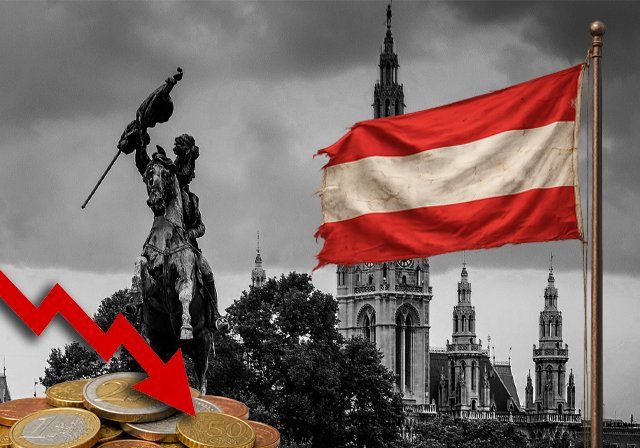
Austria, traditionally regarded as one of the wealthiest and most stable countries of Western Europe, is now facing a significant deterioration in public mood driven by the rising cost of living. Although in terms of wealth per capita Austrians remain better off than their German neighbours, it is precisely in this country that inflation — fuelled chiefly by energy prices — has struck with particular force in the wake of the pandemic. Wage statistics show that average gross earnings for a full-time job range from 3,700 to 4,200 euros, which after tax translates into roughly 2,676 euros net. While from a Polish perspective these are substantial sums, the real purchasing power of this money in Austrian price conditions is steadily eroding.
Opinion polls conducted on a sample of more than one thousand respondents reveal a deep split in how citizens perceive their own financial situation. At present, almost half of society declares satisfaction with its material status, but as many as 43% of those surveyed report a clear deterioration in their situation over the past six months. Within this negatively disposed group, 30% admit that despite difficulties they are still managing their expenditures, while 8% already declare that they are unable to make ends meet at the end of the month. This percentage shows an upward trend compared with the past decade, signalling structural changes in the condition of Austrian households.
The key factor differentiating attitudes is the level of disposable income. Optimism is preserved mainly among those with more than 4,000 euros a month at their disposal, while in households with budgets below 2,000 euros a sense of threat to their standard of living predominates. What is particularly important for macroeconomic forecasts, Austrians look to the future with considerable reserve, expecting that 2026 will be an even greater financial challenge than the years before. These concerns relate not only to current consumption but also to necessary household investments, suggesting a widespread conviction that the cost-of-living crisis is long-term in character.
Austrian society is in a phase of transition from a model of universal prosperity towards pronounced economic polarisation. Although the group of well-off citizens still predominates, the margin of financial safety for the middle class and lower earners is shrinking drastically. The fact that the citizens of such a wealthy country see the coming years as a period of mounting hardship testifies to the deep impact of energy-driven inflation and the cost of living on the sense of social stability. In the future this may lead to significant political repercussions.