I am no erudite — rather, by the grace of God, an amateur who likes to play with language. Yet for years I have felt a deep respect for the word. It can lift entire nations and be like a cornerstone in a relationship between two people.
Unfortunately, I have the impression that for years the word has been subjected to unrelenting violation. We change its meaning, hollowing it out — we bleach it of content or assign it new meanings, often vague and deceitful. We prostitute its form and diminish its standing.
A few years ago I had the chance to visit the attic of an abandoned house, where I found a bundle of letters tied together, dating from the late 1940s and early 1950s. It was correspondence between a man and a woman. The way the authors addressed each other led me to suppose I had stumbled upon a passionate romantic story. Imagine my surprise when at the end of the letter I read the signature: your loving brother! A sadness came over me at once — what a pity we no longer speak and write to each other so beautifully, to say nothing of the art of embellishing one's handwriting, once called calligraphy and taught as a subject in primary school. Because the form of the word mattered, and many a letter in those days carried the scent of perfume.
Today, the words better and more beautifully have been effectively redefined into faster and cheaper.
It is no accident that at the beginning of this text I described myself as, by the grace of God, an amateur who plays with words — for once upon a time Jan Kazimierz styled himself "by the grace of God, King of Poland." The difference is that back then it meant something entirely different. One could dismiss this as mere semantics, but in this case the shift degrades the sphere of the sacred — essential to healthy human existence — and it does so completely. What are the consequences? Overworked psychologists, overcrowded psychiatric hospitals, widespread depression, and a rising number of suicides. Today this is plain for all to see!
Moving into the public sphere — given the entirely new communication channels that are social media — there is an urgent need to define the principles of content pluralism: what to promote and what to limit. On one hand, we must not create a pluralism of internet trolls; on the other, we must not arrive at a situation where elections are won not by the best politician but the most photogenic one — on TikTok. And in that case, it will be TikTok's owners — the Chinese — who set the standard of beauty.
The same applies to all of democracy, here and now. Let us say it plainly: today, election outcomes are decided by Twitter, YouTube, Facebook, and TikTok. Whoever performs best on those platforms wins the election.
Meanwhile, the algorithms governing the virtual reality of these platforms are known only to a handful of people connected to Big Tech. The opportunities this opens for profit and the manipulation of election results on a global scale need no explaining.
Let us also remember what the Big Tech giants' executives did during the last presidential campaign in the United States! Today Musk is revealing these secrets through the Twitter Files affair, but time has passed — the elections took place, and the last few years have been a farce for those who believed in the dark sides of Biden's son — the documentation of which was subjected to effective censorship.
In our own backyard, about a year ago YouTube took the liberty of shutting down virtually all the online activity of one of the legal political parties represented in the Polish parliament! Is that not, by definition, influencing the outcome of future elections? The censorship of exclusion politics in its purest form.
On a global scale, we had a taste of the consequences of similar censorship during the anti-virus campaign. It ended just as it began — suddenly. In Poland, it ended with the outbreak of war in Ukraine. Along the way, it demolished the economies of the entire Western world, effectively silencing all doubts and questions.
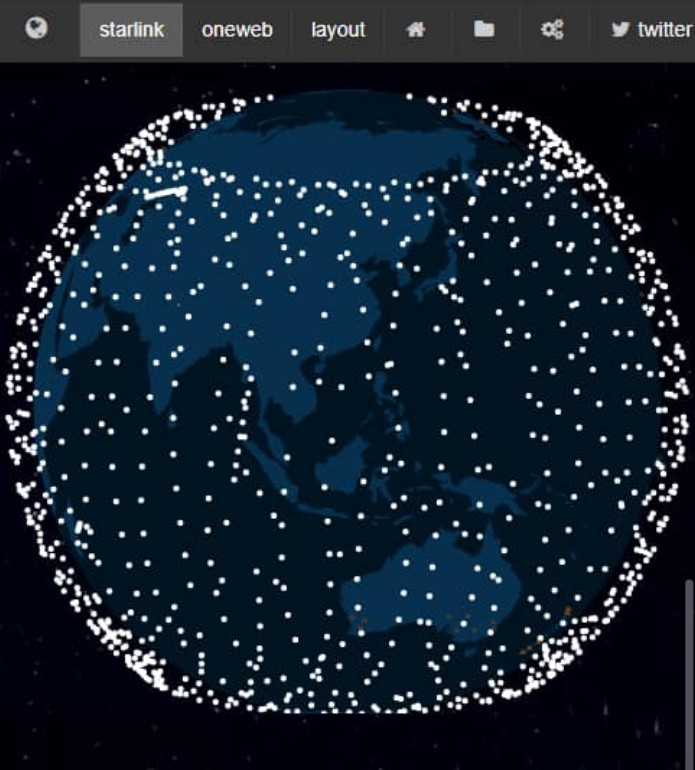
And not much water had to flow down the Vistula before we could see that yesterday's medical foundations of internet moguls have today become powerful instruments for expanding influence — without any democratic oversight mechanisms. It is through medicine, the WHO, the UN, and so-called philanthropy that a handful of a dozen or so people who control the global flow of information have begun deciding our choices — both personal and social. The image of the Starlink satellite network encircling the Earth captures this well. And all of it is the property of a single man — one could venture the thesis that the fellow has seized power over the entire world, not only without a war, but also without any social mandate in the form of winning an election.